Quick Service & Work, We Assist You 24/7
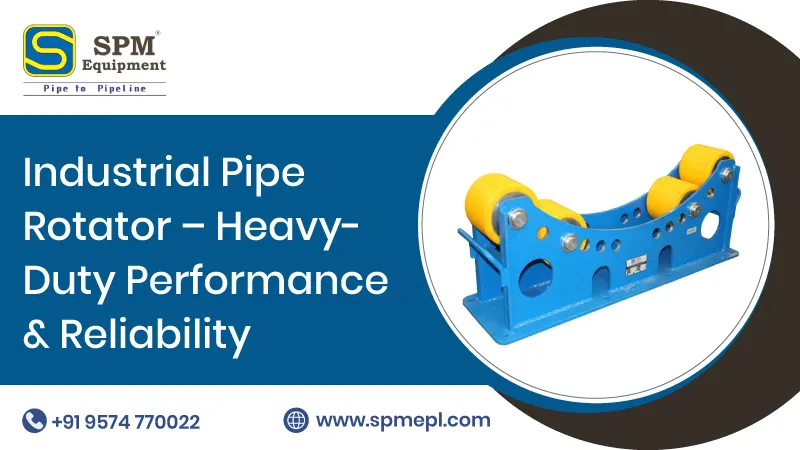
A dependable Pipe Rotator Pipe Rotator is more than a shop convenience — it’s the heart of any spool shop, fabrication line, or pipeline erection site where controlled rotation, precise positioning and heavy-load handling are required. When welders, coating teams and inspectors can rely on smooth, repeatable rotation, productivity climbs, rework falls and worker fatigue drops.
Why a quality Pipe Rotator matters to your operation
Pipes and cylindrical spools must be rotated consistently for welding, inspection, NDT, coating and fit-up. A poorly performing rotator causes off-centre rotation, vibration, inconsistent weld beads, and repeated alignment work. A well-built Pipe Rotator provides steady torque at low RPM, precise speed control for welding passes, and stable support for large-diameter or heavy-wall pipe.
For continuous welding operations or automated welding cells, a rotator that holds speed and alignment under load reduces human intervention and improves pass-to-pass consistency. SPM Equipment manufactures rotators designed to handle large offset loads and to integrate with pipe rollers and stands, making them suitable for spooling and heavy fabrication environments.
Core functions — what a rotator must do well
At a minimum, an industrial Pipe Rotator should:
- Rotate heavy cylindrical loads smoothly at controlled speeds.
- Provide adjustable torque and low-speed stability for welding.
- Centreline reliably to avoid eccentric rotation that stresses bearings and creates weld defects.
- Integrate with rollers, stands and drive systems for safe load transfer.
When these functions are executed reliably, welding quality improves, coating teams apply more even layers, and QA teams see fewer defects. SPM Equipment’s line of rotators and rollers is engineered to deliver these outcomes across typical fabrication setups.
Real-world benefits you’ll notice quickly
Switching to a fit-for-purpose Pipe Rotator produces measurable operational gains:
- Faster weld cycles because operators can maintain consistent rotation speed and focus on torch control.
- Reduced rework and fewer weld repairs, since rotation steadiness helps maintain correct root and cap profiles.
- Lower manual handling and ergonomic stress — rotators take the load and let operators work safely.
- Better integration with automation — rotators supply predictable inputs to weld manipulators and positioners.
Facilities that replace improvised methods (chains, manual spin) with engineered rotators typically record improved throughput and reduced scrap within weeks. SPM Equipment documents use cases across pipeline and fabrication projects, demonstrating practical performance improvements.
Key specifications that determine performance
When evaluating any PIPE ROTATOR, focus on a few technical specs that determine real-world performance:
- Rated load capacity (tons): match or exceed the heaviest spool you will handle.
- Speed range (rpm) and control resolution: lower speeds with fine control are essential for welding.
- Torque at low rpm: adequate torque prevents stalls during tack welding or when carrying eccentric loads.
- Drive type: electric, hydraulic or pneumatic — choose based on site utilities and safety needs.
- Centering and chucking: options for self-centering chucks or adjustable supports help reduce setup time.
- Bearing type and sealing: rugged sealed bearings handle welding sparks, dust and coarse environments.
Compare candidate units on these specs and request performance curves and test data from vendors. SPM Equipment publishes product pages and technical notes that allow buyers to match rotator capacity and configuration to application demands.
How to choose the right rotator — a step-by-step approach
Choose a Pipe Rotator using a simple, practical workflow:
- List your heaviest and most common spool weights and diameters. This sets the minimum capacity and contact geometry.
- Decide the work process: welding, coating, inspection or automated manipulator integration. Welding needs low-speed torque; coating may prioritize steady higher speeds.
- Determine site power availability — electric three-phase is common in shops; hydraulic options suit remote or heavy-duty applications.
- Pick drive and control features — variable-frequency drives (VFDs) or hydraulic flow controls give fine speed regulation.
- Check integration needs — does the rotator need to mount to rollers, chucks, or skid systems? Ensure mechanical interfaces match.
- Request a demonstration or a sample test on your spool types. Run representative cutting/welding/coating cycles to validate behavior.
Following these steps reduces surprises and helps you justify the purchase with measured KPIs: cycle time, weld quality, and operator feedback. SPM Equipment supports sample tests and has a product range aimed at pipeline spooling and fabrication needs.
Design choices: powered vs. passive rotators
Rotators come as powered units (driven rollers) or passive units paired with powered drives. Your choice depends on workflow:
- Powered PIPE ROTATORs (self-contained) deliver integrated speed control and torque — ideal for stand-alone welding stations.
- Passive rotators (idler rolls) support the pipe while an external drive or rotator provides rotation — useful when using a central drive for multiple rollers.
- Integrated systems include rotators combined with chain or chuck drives to secure and rotate long spools with precise speed profiles.
Assess job variability: for variable-diameter frequent jobs, powered, adjustable rotators usually save setup time and improve consistency. For repetitive, identical spools, integrated multi-roll systems can be more economical.
Integration with welding manipulators and automation
In automated welding environments, the Pipe Rotator must supply stable, repeatable rotation and communicate with weld head controllers for synchronized motion. Key integration points:
- Speed control interface (analog, digital, or fieldbus) for coordinated motion.
- Feedback signals (tachometer or encoder) that allow welders to synchronize rotation with welding feed.
- Mechanical alignment capability so rotator axis matches the manipulator centreline.
Modern rotators offer VFD-based control with encoder feedback and safety interlocks. If you plan automation, choose a rotator vendor that provides integration drawings and control interface options. SPM Equipment’s product portfolio includes rotators suited for both manual and automated setups.
Safety, guarding and operational ergonomics
Rotators handle heavy loads — safe design and operation matter:
- Emergency stop and guarded pinch points prevent operator injury.
- Stable bases or secure mounts to rollers or stands avoid tipping under eccentric loads.
- Clear operator panels and easy-to-access controls reduce mistakes.
- Safe lifting points and rated slings for moving rotators between stations.
Confirm with your supplier that their rotators meet local machine safety standards and ask for operator training documentation. SPM Equipment highlights practical features and installation guidance on its product pages to help buyers deploy safely.
Maintenance and spare parts — keep the rotator turning
Maintenance is straightforward when the unit is designed for it. Look for:
- Sealed bearings and grease points for scheduled service.
- Replaceable roller housings and common fasteners.
- Readily available spare parts (rollers, bearings, seals).
- Clear manuals and troubleshooting guides.
A good supplier minimizes down-time by stocking spare wheels and bearing kits. SPM Equipment’s manufacturing capacity and parts listings support regular service and export packing for global customers.
Why Choose Us
SPM Equipment supplies engineered Pipe Rotator solutions tailored for pipeline, fabrication and heavy-industry applications. Our product range spans powered rotators, passive rollers and integrated rotator-roller systems — each designed with sealed bearings, replaceable polyurethane or nylon rollers, and robust frames suitable for shop and field environments.
SPM Equipment supports clients with technical selection help, sample testing and spare parts logistics so installations run reliably and maintenance remains straightforward. Choosing SPM Equipment gives you access to manufacturing experience and practical product documentation that helps you deploy rotators quickly and keep them productive over long service life.
Conclusion
A properly specified Pipe Rotator transforms welding, coating and fabrication workflows by providing controlled, reliable rotation for heavy spools and cylindrical structures. Prioritize rated capacity, low-rpm torque, speed control precision and durable contact materials when evaluating units. Confirm power source compatibility and integration needs for manipulators or automation systems.
Run acceptance tests with your heaviest loads and representative welds to validate performance before full deployment. Factor in spare-part availability, sealed bearings and replaceable rollers for lower lifecycle cost. With the right rotator — and a supplier who supports testing and parts — you gain steady productivity, reduced rework and safer, less strenuous operations across shop and field environments.
Discover heavy-duty Pipe Rotator solutions for welding, spooling and coating — contact SPM Equipment for samples, specs and pricing: Call +91 9574770022 or email sales@spmepl.com.
Key Takeaways
- Pipe rotators are critical for consistent welding and fabrication quality
A reliable Pipe Rotator ensures smooth, controlled rotation, preventing vibration, off-centre movement, and uneven weld beads that lead to rework and delays. - Low-speed stability and torque define real-world performance
For welding and inspection, a rotator must deliver steady torque at low RPM, maintain centreline accuracy, and support heavy or eccentric loads without stalling. - Correct specification depends on workflow and load requirements
Pipe diameter, maximum spool weight, required speed range, power source, and integration with rollers or welding manipulators should guide rotator selection. - Safety, ergonomics, and maintenance affect total cost of ownership
Features such as guarded pinch points, emergency stops, sealed bearings, replaceable rollers, and easy access to spare parts reduce downtime and improve operator safety. - Working with an experienced manufacturer improves long-term reliability
SPM Equipment provides engineered pipe rotator solutions with robust construction, integration support, and spare-parts availability—helping fabrication shops and pipeline sites achieve higher productivity with lower rework.
Frequently Asked Questions (FAQs)
What load capacity should I choose for a pipe rotator?
Pick a capacity equal to or higher than your heaviest spool plus a safety margin — typically 20–30% above maximum working load. Match capacity to spool weight, not just pipe diameter.
Are polyurethane rollers better than steel for coated pipe?
Polyurethane rollers reduce marking and provide grip without scuffing coatings, making them preferable for finished or painted pipes; steel rollers suit extreme load or high-temperature cases.
Can rotators be used in automated welding cells?
Yes. Modern rotators provide speed control and encoder feedback for synchronization with welding manipulators and contribute to repeatable weld geometry. Confirm control-interface compatibility when procuring.
How often should rotator bearings be serviced?
Service intervals depend on usage and environment; inspect seals and bearings monthly in heavy-use environments and follow the supplier’s lubrication schedule. Sealed bearings reduce maintenance frequency.
Do you provide on-site testing and commissioning?
Reputable suppliers, including SPM Equipment, typically support on-site commissioning, sample testing and operator training to validate rotator performance with your spools and processes. Request these services during procurement.