Quick Service & Work, We Assist You 24/7
Key Takeaways
- A pipe lifting belt improves safety by distributing load evenly and reducing the chance of dropped or slipping loads.
- It protects pipe surfaces and coatings better than metal chains or generic slings.
- The pipe lifting belt speeds up rigging and reduces labor time in fabrication yards and pipeline sites.
- It is versatile enough to handle multiple pipe sizes and configurations, simplifying inventory.
- SPM Equipment’s pipe lifting belt is built for durability and practical use in harsh industrial environments.
Lifting heavy pipes by hand or with makeshift slings is risky, slow, and costly—especially on large industrial projects in Argentina, Tanzania, Kuwait, Thailand, or Qatar. A single misalignment or dropped load can cause injuries, pipe damage, and project delays that no contractor can afford. A properly engineered pipe lifting belt turns this challenge into a safe, repeatable operation. In this in-depth guide, you’ll learn what a pipe lifting belt is, how it improves safety and efficiency, and where it fits best in industrial piping, pipeline, and maintenance projects across these growing markets.
What Is a Pipe Lifting Belt?
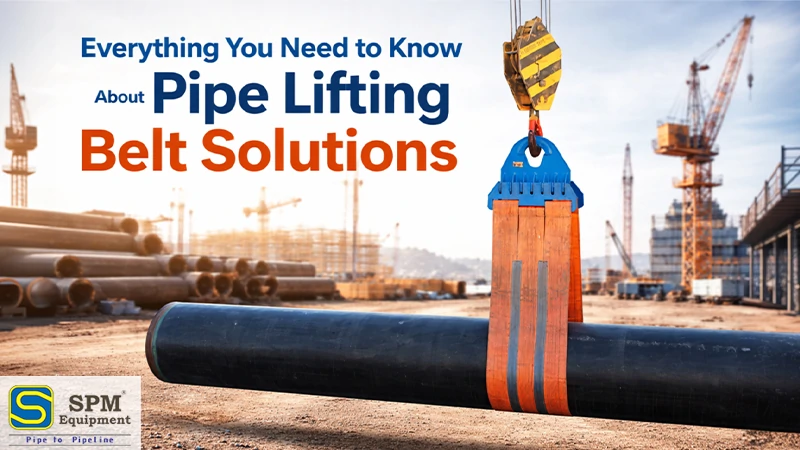
A pipe lifting belt is a flexible, load-rated strap designed to wrap around a pipe or bundle of pipes and connect to a crane, hoist, or lifting device. Unlike basic wire slings or chains, a pipe lifting belt is built from strong synthetic fabric with reinforced lifting points that distribute weight evenly and protect the pipe surface from dents or scratches. SPM Equipment’s pipe lifting belt follows this logic, using a robust construction that can handle heavy loads while remaining easy to handle and position.
In practice, the pipe lifting belt goes around the pipe circumference, is tightened or secured, and then hooked to the lifting gear. This configuration keeps the pipe stable, reduces rolling, and minimizes the chance of sling slippage or damage to coatings or welds.
Why You Need a Dedicated Pipe Lifting Belt
If you still rely on generic slings or chains for pipe handling, you’re likely dealing with several hidden problems:
- Increased risk of pipe roll-over or shifting during lifts.
- Marks, dents, or coating damage on the pipe surface.
- Higher labour time spent repositioning and securing pipes manually.
- Greater strain on riggers and crane operators, especially in repetitive lifts.
A purpose-built pipe lifting belt solves these issues by:
- Contouring to the pipe’s shape instead of squeezing it like a chain.
- Using padded or coated contact areas to protect the pipe.
- Simplifying setup so that one or two operators can quickly secure and release the belt.
On projects in Qatar’s oil and gas fields or Thailand’s industrial zones, a pipe lifting belt often becomes the standard rigging method for pipeline sections, pre-fabricated spools, and risers because it balances load control with pipe protection.
The Main Benefits of Using a Pipe Lifting Belt
Putting Workers and Equipment First
At any construction or pipeline site, safety is the absolute number one priority whether that’s in Tanzania, Kuwait or Argentina. With a pipe lifting belt, you reduce the chances of a dropped load by spreading the weight of the pipe evenly around its contact points, rather than over a few small points. That means the pipe stays stable and there’s a lot less chance of localized stress building up.
For the guys on the ground, the soft fabric of the pipe lifting belt is a whole lot easier to handle and it’s much less likely to cause that nasty rope burn type injuries that you get with metal chains. SPM Equipment have made sure that their pipe lifting belt handles like a dream in all sorts of environments – whether it’s dusty or humid.
Keeping Your Pipes in One Piece
In the world of pipeline construction and offshore projects, it’s a real money killer when you get damage to the coatings or dents on the pipes themselves. And that’s before you even get to the cost of repairs or the fact that they might get rejected in inspections. But a pipe lifting belt is specifically designed to avoid the sharp edges pressing in on the pipe while still getting a solid grip. The contact area is a lot wider and more forgiving which really helps to preserve the coatings, weld areas and pipe surface – it’s especially important with projects that use coated or lined pipes, like in Qatar’s water or desalination plants or in Thailand’s petrochemical facilities where corrosion-resistant coatings are a must.
Speed Up Your Handling and Cut Labour Time
In fabrication yards in Tanzania or Kuwait, every minute counts and time spent rigging and repositioning pipes directly affects the project timeline. A pipe lifting belt is usually a whole lot quicker to attach and remove than a chain or wire sling because it can be slung around the pipe and hooked up with a minimum of fuss. SPM Equipment’s pipe lifting belt is designed from the ground up to be easy to use – which means your teams can move more pipe sections in a shift without having to bring in extra crew.
It also means fewer rigging adjustments – which in the end means less fatigue for the guys doing the rigging, which over time helps cut down the risk of human error during critical lifts.
Get One Tool That Does It All
A single pipe lifting belt from SPM Equipment is often designed to work with a range of pipe diameters which makes it a really versatile tool for projects handling different pipe sizes. Some designs can even be adapted to handle multiple pipes banded together or for irregular shapes like valves and flanges, depending on how things are set up.
For large-scale projects in Argentina or Qatar, this sort of versatility really helps to simplify inventory management and reduces the need to stock multiple specialized slings.
Where is a Pipe Lifting Belt Typically Used?
Pipeline Construction & Installation: A Necessity For Long-Distance Projects
When it comes to building long pipelines, it’s a repetitive process: pulling pipes from stockpiles, placing them on the line, aligning them, and then lowering them into trenches. A pipe lifting belt lets operators carefully pluck each section from the ground without scratching the pipe or displacing nearby equipment. This really comes in handy on projects in rough terrain or out in the middle of nowhere – like in Tanzania or Argentina where you can’t just bring in a whole army of workers or gear.
Fabrication Yards & Workshops – Where Precision Matters
In yards where they’re building new pipe sections in Thailand, Kuwait, and Qatar, they cut, bevel and weld the pipe into manageable spools. That’s where a pipe lifting belt makes a real difference – by helping safely shift those spools out of the welding area and into storage or onto the transport vehicles, keeping the welds intact and avoiding the extra hassle of re-doing them.
Repair & Maintenance Jobs: Tight Spaces Call for a Specialised Solution
In situations where repair work is needed, like during plant maintenance or when hooking up two pipelines – which is all about working in tight spaces. A pipe lifting belt can be threaded around the existing pipes, with minimal fuss, and without having to take out a lot of surrounding equipment – making it super handy for tricky or confined space lifts. That’s especially valuable in industrial plants & refineries where downtime really costs you.
How to Choose the Right Pipe Lifting Belt for Your Project
Not every pipe lifting belt is created equal. When selecting a pipe lifting belt, consider:
- Working load limit (WLL) relative to your heaviest pipe or bundle.
- Diameter range and adjustability—does it fit the smallest and largest pipes you handle?
- Material and abrasion resistance—will it withstand exposure to oil, UV, or chemicals at your site?
- Connectivity—are the lifting loops compatible with your cranes, hooks, or rigging hardware?
SPM Equipment’s pipe lifting belt is engineered around these factors, offering a balance of strength, adaptability, and ease of use suitable for industrial clients in Argentina, Tanzania, Kuwait, Thailand, Qatar, and beyond.
Why Choose SPM Equipment?
SPM Equipment has been building a reputation over years for delivering seriously tough, high-quality lifting & handling solutions that really hold up to the realities of a heavy-industry job site. Our pipe lifting belt isn’t just about meeting load ratings – it’s been designed to keep the friction between the sling & the pipe as low as possible, protect those expensive pipe coatings, and just generally make life easier for the riggers on site.
With a focus on using top-grade materials, making things as easy to use as possible, and building things that will actually last in the field – we’ve got the sort of equipment that helps teams in places like Argentina, Tanzania, or Qatar get the job done quicker, safer, and with fewer second takes. And when you partner with SPM Equipment, you’re working with people who really get the challenges of doing this kind of work on a real job site, and who deliver solutions you can rely on, time after time.
Conclusion
A pipe lifting belt is more than just a sling – its a high-tech solution that can keep your people safer, keep your pipes in good nick, and get the job done a whole lot faster on pipeline, fabrication & maintenance projects. And SPM Equipment’s pipe lifting belt is a great example of a product that really strikes the right balance between strength, flexibility, and just plain ease of use – so you can get the job done, even when you’re in a country like Argentina, Tanzania, Kuwait, or Thailand where just getting the job done on time really is everything. By standardising on our pipe lifting belt, you can streamline your rigging procedures, cut the risk of accidents, and just generally keep your pipes in the best possible shape, all the way from the yard to the installation site.
For more information on how the right stainless steel pipe clamp can improve safety, efficiency, and durability in your piping project, contact SPM Equipment today. Call us at +91 9574770022 or email sales@spmepl.com to discuss your requirements and get product recommendations tailored to your project in Argentina, Tanzania, Kuwait, Thailand, Qatar, or any other location.
FAQs
What is a pipe lifting belt used for?
A pipe lifting belt is used to safely lift and move pipes or pipe bundles using cranes or hoists while keeping the pipe stable and protecting its surface.
Can a pipe lifting belt damage coated pipes?
When correctly rated and used, a pipe lifting belt typically protects coated pipes better than metal chains, as it spreads the load and avoids sharp contact points.
What pipe sizes work with SPM Equipment’s pipe lifting belt?
It is engineered to fit a wide range of pipe diameters commonly used in industrial and pipeline projects, with specific size ranges detailed in the product specifications.
Is the pipe lifting belt suitable for outdoor or harsh environments?
Yes, pipe lifting belts are built from durable synthetic materials that resist abrasion, UV exposure, and many industrial conditions found in countries like Qatar, Kuwait, and Argentina.
How does a pipe lifting belt improve rigging efficiency?
It is faster to attach and remove than chains or slings, reduces the need for repositioning, and lowers the risk of rework caused by pipe damage during lifting.