Quick Service & Work, We Assist You 24/7
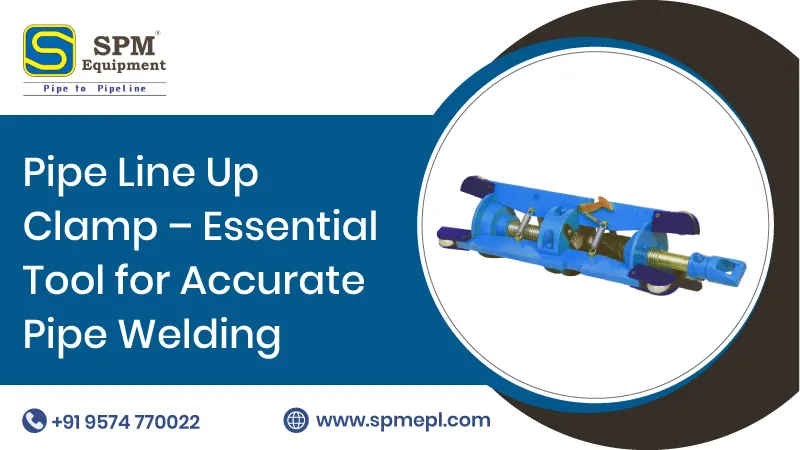
Choosing the right clamp clearly reduces rework, speeds fit-up, and improves overall welding quality. A well-designed Pipeline Up Clamps for Welding holds pipe ends concentric, controls gap, and gives welders the confidence to produce strong, leak-free joints. Choosing the correct clamp reduces rework, speeds fit-up, and improves overall welding quality. In this article we cover practical selection steps, field use, maintenance, safety, and procurement guidance so teams can pick the clamp that matches their pipe sizes and welding processes.
Why alignment is the foundation of a good weld
Good alignment directly affects root penetration, weld geometry and joint integrity. Misalignment or offset causes uneven stress distribution and may require grinding, rework or even scrap.
A precision Pipeline Up Clamps for Welding minimizes offset and provides a secure hold that stabilizes the joint during tack and full-pass welding. For critical pressure piping and gas lines, accurate fit-up reduces the risk of leaks and costly downtime.
Types of line-up clamps and their uses
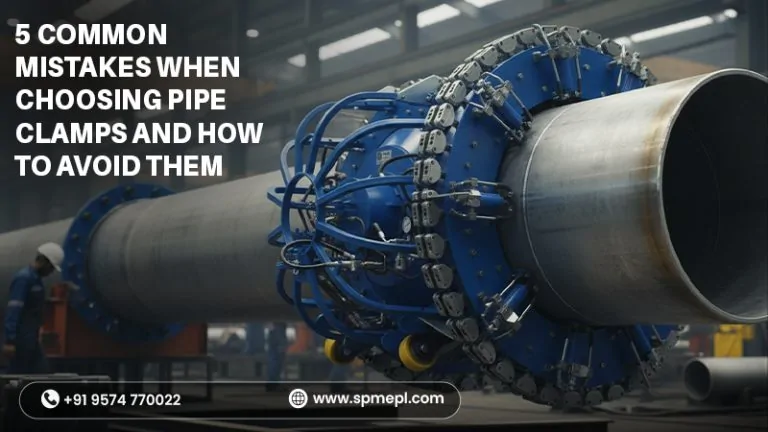
There are a few common clamp types used in pipeline work: internal clamps that expand inside the pipe to centre and hold, external clamps that grip outside surfaces for alignment, self-centred clamps, and pneumatic or hydraulic variants that allow faster operation. Internal clamps are often used for thin-wall or corrosion-sensitive surfaces where external gripping could mark the pipe. External clamps work well on thicker shells and when external access is convenient. Pneumatic and hydraulic versions speed repetitive fit-up with rapid actuation and predictable clamping force.
How a clamp improves welding productivity step by step
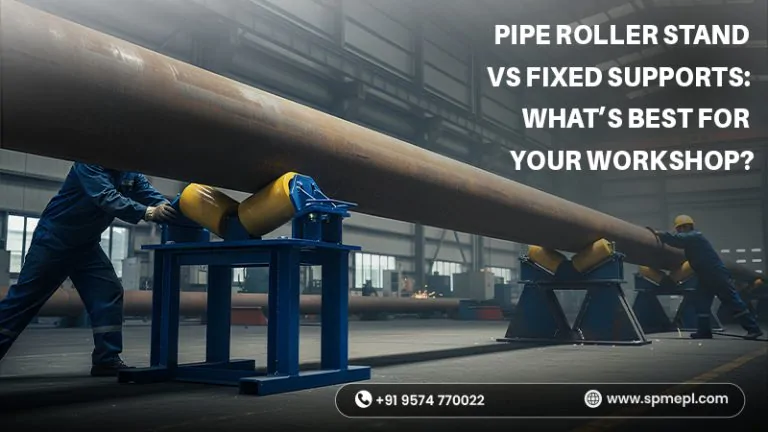
First, the clamp brings pipe ends together with controlled gap and concentricity, which reduces the time welders spend adjusting angles. Second, it holds the joint during tack welding so the welder can focus on bead quality. Third, for high-volume spooling, clamps are used with rotators and rollers to present a steady, rotating workpiece that reduces manual handling. These incremental improvements add up — fewer interruptions, less rework, and higher hourly throughput on the shop floor. SPM Equipment’s product listings show internal, external and powered clamp families matched to typical spool-shop workflows.
Selecting the right clamp: a practical checklist
Begin by listing pipe outer diameters and wall thicknesses you commonly work with. Next, decide where clamps will be used — confined field sites or spacious fabrication bays — and whether you need powered actuation. Choose a clamp rated above your maximum pipe diameter and weight, with matching core features like liners or protective pads if the pipe finish matters. Verify the clamp’s centering tolerance and maximum misalignment compensation. Finally, request sample trials using your materials; seeing a clamp perform on representative joints removes guesswork.
Field setup and safe operation
Before using any clamp, inspect the tool for damage, clean contact faces, and make sure hydraulic or pneumatic connections are secure. Use rated lifting gear when moving heavy clamps. During fit-up, tighten gradually and monitor alignment with straightedges or feeler gauges. When tacking, check that the clamp holds through heat cycles; some clamping systems include cushions to absorb thermal movement. For pneumatic and hydraulic clamps, follow operating pressure limits and bleed the system before disconnecting hoses or adjusting.
Maintenance and troubleshooting
Regular maintenance extends clamp life. Wipe contact surfaces clean after use to avoid buildup of scale or welding spatter. Inspect seals, pins and bolts for wear and replace worn liners to keep clamping pressure uniform. If hydraulic clamps show sluggish action, check fluid cleanliness, filter status and actuator seals.
For pneumatic models, confirm air supply dryness and valve function. Keeping a small spare parts kit — O-rings, liners, fasteners — minimizes downtime when a clamp needs quick service. SPM Equipment documents spare-part options to help operations plan service kits.
Material selection and corrosion resistance
Clamps come in carbon steel, stainless steel, and coated finishes. For corrosive environments or food/pharma piping, stainless clamps resist pitting and surface degradation better than uncoated carbon steel. Protective pads or liners prevent marking on painted or galvanized pipe. Choose materials that align with job environment and cleaning processes to avoid premature clamp damage and to preserve pipe finish during fit-up. SPM Equipment offers material options and surface treatments to match varied site conditions and regulatory needs.
Integration with welding and alignment systems
For high-precision or automated welding, clamps integrate with pipe rotators, roller stands and manipulators. A good Pipeline Up Clamps for Welding matches the mechanical interface of rotators and supports so the pipe axis remains concentric while rotating. When integrated with encoder feedback systems, clamps and rotators can help synchronize rotation speed and welding travel for consistent bead profiles. Many fabrication shops find that pairing clamps with rotators reduces operator fatigue and produces repeatable, high-quality welds.
Training and operator competence
Even the best clamp will underperform if operators are unfamiliar with its controls and limits. Provide hands-on training covering safe setup, pressure limits, alignment checks, and basic maintenance tasks.
Create simple checklists for pre-use inspection and post-use cleaning to keep clamps ready and safe. Training reduces accidents and keeps production steady during peak work. SPM Equipment provides documentation and customer support to help onboard operators quickly.
Real-world benefits and case examples
Companies that upgrade to precision line-up clamps commonly report faster fit-up times, fewer weld repairs, and improved weld consistency. For pipeline spooling yards, integrating clamps with rotators shortens cycle time for circumferential welds and reduces manual repositioning. On pressure-critical installations, better alignment translates to fewer leaks and longer service life. SPM Equipment’s case notes highlight projects where field crews improved fit-up times and reduced rework after switching to modern clamp designs.
Spare parts, kits and logistics planning
Keep spare liners, O-rings, pins and fasteners. For hydraulic systems, stock seals and compatible hydraulic fluid. A field parts kit reduces downtime. SPM Equipment offers replacement liners and seal kits to shorten repair turnaround and reduce the need to send clamps back to workshop for minor repairs.
Common mistakes and how to avoid them
Avoid buying clamps rated only for the most common pipe size and not for the heaviest occasional spool; that leads to overstressed clamps and premature failure. Overlooking spare liners and seals can keep a clamp out of service for days while parts ship. Underestimating field training creates misuse risks and potential pipe damage. Address these by building spare kits, requesting clear manuals, and scheduling hands-on training during commissioning.
Simple pre-use checklist for field crews
Before each use, crews should confirm clamp serial number and condition, clean contact areas, verify liner integrity, check hoses and connectors, and test emergency releases. If the clamp shows signs of distorted frames, hairline cracks or seized pins, withdraw it from service and tag for inspection.
Why choose us
SPM Equipment manufactures a range of Pipeline Up Clamps for Welding solutions including internal, external and pneumatic models designed for both field and fabrication shop use. Our clamps are built with robust materials and replaceable liners, so they match diverse pipe finishes and site conditions. SPM Equipment supports spare-parts kits and on-site commissioning to help teams validate clamp performance quickly. Choosing SPM Equipment connects you with experienced trusted supplier support, traceable certificates and practical installation guidance so your field or shop teams deploy clamps with confidence.
Conclusion
Choosing the correct Pipeline Up Clamps for Welding directly improves weld quality, reduces rework, and speeds production. Accurate clamps reduce alignment time, protect pipe finishes, and lower consumable use. Integrating clamps with rollers and rotators supports automated welding and consistent bead geometry. Operators benefit from safer handling, less fatigue, and clearer workflows. Maintenance-friendly designs cut downtime, and spare-part planning prevents project delays. For procurement, compare centering tolerance, clamping force, actuator type and service support. With proper selection, training and reliable supplier support, fabrication teams gain measurable productivity and higher first-pass yield across projects and long-term operational savings and credibility.
Call us +91 9574770022 or email sales@spmepl.com for product details and sample requests.
Key Takeaways
- Accurate alignment is critical to weld strength and reliability
Proper use of Pipeline Up Clamps for Welding keeps pipe ends concentric and gap-controlled, improving root penetration, weld geometry, and long-term joint integrity. - The right clamp type depends on pipe size, access, and workflow
Internal, external, pneumatic, and hydraulic clamps each serve different site conditions, pipe thicknesses, and production speeds. Matching clamp design to the application reduces setup time and rework. - Well-chosen clamps significantly improve productivity
By stabilizing joints during tack and full-pass welding, clamps reduce manual adjustments, integrate smoothly with rotators and rollers, and increase hourly throughput in both field and shop environments. - Maintenance, materials, and training protect long-term performance
Regular cleaning, liner replacement, proper material selection for corrosive environments, and operator training prevent downtime and extend clamp service life. - Working with an experienced manufacturer simplifies procurement and support
SPM Equipment offers internal, external, and powered line-up clamps with replaceable liners, spare-part kits, and technical guidance—helping teams achieve consistent weld quality and faster project delivery.
Frequently Asked Questions (FAQs)
What pipe sizes can a typical line-up clamp handle?
Line-up clamps are made for a wide range of ODs. Many suppliers provide models for small diameters (2–6″) up to large mains; confirm the OD range and clamping force on the datasheet for your chosen model.
Should I choose internal or external clamps for stainless pipe?
Internal clamps are often preferred for stainless or thin-wall pipes to avoid external marks; external clamps work well for thicker shells and when external access is simpler. Consider liners or protective pads where finish is critical.
Are pneumatic clamps better than hydraulic or manual clamps?
Pneumatic clamps provide fast actuation and are convenient where compressed air is available. Hydraulic clamps provide higher force in compact form and suit heavier pipelines. Manual clamps are cost-effective for occasional use or remote sites without utilities. Choose based on workload and site constraints.
How often should clamps be inspected and serviced?
Inspect clamps before each use for visible damage and perform scheduled maintenance monthly or per hours-of-use for heavy-duty programs. Replace liners and seals proactively to avoid in-field failures. Keep a small spare-parts kit on-site.
Can clamps be customized for uncommon flange or pipe geometries?
Yes. Many manufacturers, including SPM Equipment, provide custom jaw shapes, extended reaches, and special liners to match unique pipe geometries. Discuss customization early in the procurement process so delivery aligns with project schedules.