Quick Service & Work, We Assist You 24/7
Smooth, controlled rotation of pipe during welding, fabricating, or assembly is the difference between slow rework and efficient production. A well-designed pipe roller stand keeps pipe cantered, reduces operator strain, and delivers repeatable alignment for welding, coating and inspection operations.
What a pipe roller stand must do for your shop
A pipe roller stand’s primary job is straightforward: support the pipe and let it rotate smoothly while the operator welds, grinds, or paints. But the details matter: wobble, uneven rolling, poor mounting and weak bearings add minutes to each splice and increase rework.
The correct stand manages load distribution, resists lateral movement, and offers easy height and lateral adjustment so the pipe axis stays true to the welding torch or machine centreline. In many fabrication yards and pipeline sites, a robust roller stand also doubles as a transport support or staging point during spool assembly, which increases its value per unit.
Key features that define a great roller stand
When evaluating roller stands, prioritize mechanical quality and practical ergonomics. Important features include:
- Strong, weldable frame and base that resists flex under load.
- Precision wheels or rollers with wear-resistant coatings and sealed bearings for long life.
- Adjustable heights and centreline controls so the stand aligns quickly with nearby equipment.
- Quick-mount or clamping options to lock stands to beams, tracks or floors for heavy operations.
- Portable carry points or handles for plant mobility and rapid re-deployment.
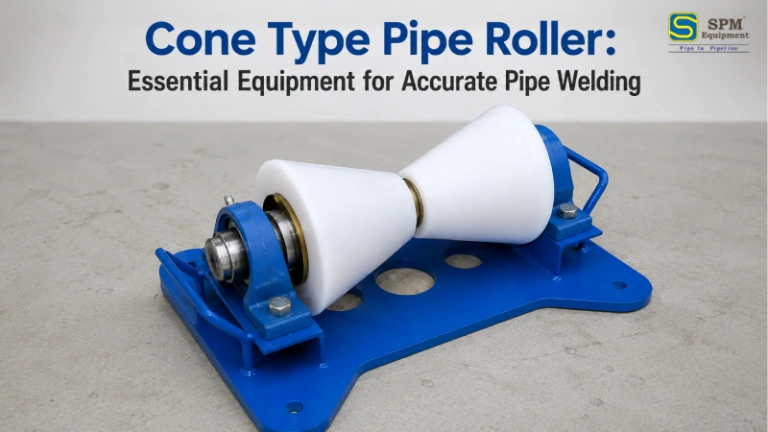
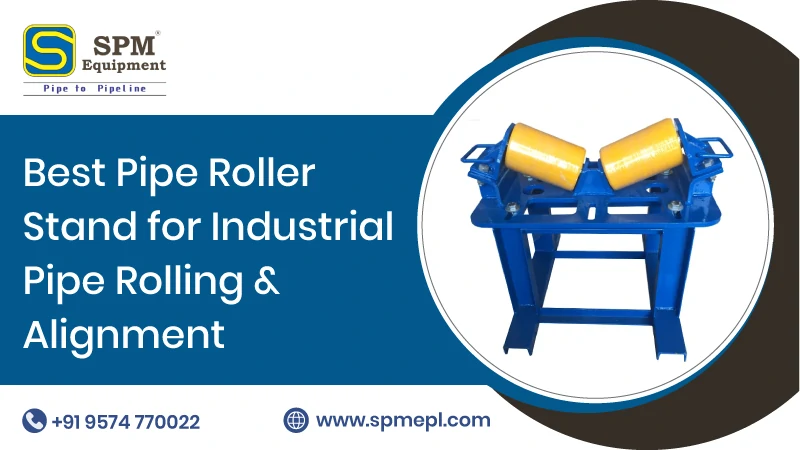
SPM Equipment’s Beam Clamp Rigging Roller With Stand showcases many of these attributes: durable construction, urethane-coated rollers, sealed bearings, bolt-together replaceable components, and carry handles for transport — features that reduce downtime and simplify maintenance on multi-shift sites.
How capacity, roller design and coatings affect performance
Capacity rating and roller design determine what pipe sizes and weights a stand can handle reliably. Roller stands intended for heavy pipeline work should have wide contact faces and robust bearings to spread loads and avoid point stresses that deform pipe shells. Coatings such as polyurethane or nylon on roller surfaces reduce marking and grip the pipe enough to prevent slippage without abrading paint or protective cladding.
Sealed bearings limit ingress of dust and welding spatter, giving longer bearing life and smoother rotation even in tough field environments. SPM Equipment lists models with rated capacities suitable for typical pipeline and staging needs, and their rollers include urethane coatings with replaceable wheel assemblies for quick service.
Practical step-by-step selection process
Follow this stepwise approach to choose the right pipe roller stand for your project:
- Define the pipe range and maximum weight you will handle — inner/outer diameters and wall thickness set the required load rating.
- Decide where stands will be used — shop floor, scaffolded structures, pipe racks or field sites — then pick a mounting style (floor, beam-clamp or integrated).
- Select roller material and coating based on pipe finish and surface sensitivity: urethane or PU-coated rollers work well for painted surfaces; nylon or steel with liners suit heavy, abrasive service.
- Check roller bearing specs — sealed, greaseable bearings are preferable in welding environments.
- Ask for documentation: capacity rating, spare parts list, and export/packing details if you order at scale.
Using that process reduces surprises and helps procurement compare apples to apples when reviewing offerings from different suppliers. SPM Equipment’s product pages provide specific size ranges and replaceable parts information to support these selection steps.
Safety and ergonomics: small choices that matter
When teams work with heavy pipes, operator safety and ergonomics are central. Choose stands with stable wide bases and clear lock mechanisms that prevent tipping during rotation. Handles and carry points that let two technicians move a stand without awkward lifts reduce the chance of strains and accidents.
For beam-clamp stands, a secure double-sided clamping system that grips the beam flange firmly lowers the risk of slippage during high-moment operations. SPM Equipment’s beam-clamp design includes a double-sided clamp that locks to beam flanges up to 12 inches, improving safety on elevated rigging tasks.
Durability and maintenance — real-world cost drivers
Total cost of ownership for roller stands is shaped by routine maintenance, spare part availability and ease of repair. Components that are bolt-together and replaceable reduce downtime because technicians can swap worn wheels or housings quickly rather than send a stand for a full rebuild.
Look for stands with common bearing sizes and off-the-shelf fasteners so you can keep basic spares in the yard. The SPM Equipment design emphasizes replaceable wheel housings and common fastener points so routine service remains fast and predictable.
How to size roller wheels and contact width
Wheel diameter and contact width influence how the load distributes and how easily the pipe accelerates or decelerates. Larger diameter wheels reduce rolling resistance and perform better on rough surfaces, while wider contact faces spread load to avoid local shell deformation on thin-wall pipe.
When handling coated pipes, a slightly larger contact area reduces point pressure and protects finishes. Check supplier specs for recommended wheel diameters and maximum contact pressure for each wheel material. SPM Equipment provides urethane-coated rollers with sealed bearings and replaceable wheels to match varied pipe finishes and diameters.
Field verification — tests to run before procurement
Before purchasing a batch of stands, run a short field test:
Mount one stand type, clamp to the expected structure, and load the heaviest representative pipe. Observe any lateral movement, measure runout during rotation, and check bearing warmth after extended use. Confirm that roll speed and operator ergonomics are acceptable and that the stand locks securely under dynamic conditions. These tests surface real-world issues that spec sheets sometimes hide.
SPM Equipment supports sample requests and offers product details so vendors and users can run these checks during evaluation.
Export, packing and procurement considerations for bulk buys
If you are buying stands for multiple sites or exporting them, shipping protection and packing standards matter. Proper palletizing, moisture-resistant packaging and clear parts lists reduce customs issues and speed site deployment. SPM Equipment lists export destinations and offers export-ready packing to help buyers handle international logistics and minimize transit damage on longer routes. For high-volume purchases, ask for part numbers and spare-pack assemblies so maintenance teams can replace items quickly in the field.
Why Choose Us
SPM Equipment provides an engineered line of pipe roller stands and beam clamp rigging rollers designed for pipeline construction, staging and fabrication shops. Our products combine heavy-duty frames, urethane-coated rollers with sealed bearings, and modular bolt-together components that make on-site service fast and predictable.
SPM Equipment’s Beam Clamp Rigging Roller with Stand is designed to push or pull pipe vertically, to fasten securely to I-beam flanges, and to handle heavy loads with a double-sided clamping system that improves safety on elevated work. Choosing SPM Equipment gives you tested product features, spare parts access, and export-ready packing to support multi-site projects with consistent performance.
Conclusion
A carefully selected pipe roller stand delivers quieter, quicker and more accurate pipe handling across fabrication, welding and staging processes. Match the stand’s capacity, roller material, mounting method and adjustability to your pipe sizes and site conditions. Prioritize replaceable components and sealed bearings for longer service life and validate fit with a short field trial under representative loads.
For elevated or structural work, beam-clamp models with secure double-sided clamping improve operator safety and limit movement during long welds. Investing in well-engineered stands and compatible rotators reduces downtime, lowers rework, and speeds spool completion — outcomes that justify the purchase quickly through improved throughput and fewer site delays.
Learn how the Best Pipe Roller Stand for Industrial Pipe Rolling & Alignment can speed your spool shop and pipeline staging—contact SPM Equipment for specs, samples and pricing: Call +91 9574770022 or email sales@spmepl.com.
Key Takeaways
- Pipe roller stands are essential for smooth and accurate pipe rotation
A well-designed stand keeps pipes centered and stable, enabling smooth rotation during welding, fabrication, coating, and inspection while reducing operator fatigue and rework. - Mechanical design quality directly affects productivity
Strong frames, sealed bearings, wear-resistant rollers, and precise height and centerline adjustments prevent wobble, uneven rolling, and alignment issues that slow down operations. - Capacity, roller material, and coatings must match the application
Correct load rating, adequate contact width, and coatings such as polyurethane or nylon protect pipe surfaces, distribute loads evenly, and ensure long bearing life in harsh environments. - Safety, ergonomics, and maintenance drive long-term value
Wide bases, secure locking or beam-clamp systems, carry handles, and bolt-together replaceable components improve site safety, ease handling, and lower total cost of ownership. - Choosing an experienced supplier improves reliability and uptime
SPM Equipment provides engineered pipe roller stands with sealed bearings, replaceable rollers, and export-ready designs, helping fabrication shops and pipeline sites achieve faster throughput with consistent, dependable performance.
Frequently Asked Questions (FAQs)
What pipe sizes can the Beam Clamp Rigging Roller With Stand handle?
The model covers a wide range and is offered for pipe sizes from 2″ and above, with rated capacities for heavy pipeline loads; check SPM Equipment’s product page for exact size variants and load ratings.
Are the roller wheels replaceable on the stand?
Yes. The design uses bolt-together wheels and housings so technicians can remove and replace wheels quickly without specialized tooling. This reduces downtime during maintenance cycles.
Can beam-clamp roller stands be used on all I-beam sizes?
The beam-clamp rollers are designed with a double-sided clamping system compatible with common I-beam flanges up to specified widths (SPM Equipment notes clamping up to 12 inches); confirm flange range when ordering.
How are rollers protected from welding spatter and dust?
Choose rollers with sealed bearings and urethane or PU coatings that resist abrasive wear and are tolerant of moderate spatter exposure; periodic inspection and cleaning extend service life.
Do you supply export packing and spare parts for bulk orders?
Yes. SPM Equipment offers export-ready packing and maintains parts lists for replacement wheels, bearings and fasteners to support international shipments and multi-site deployments.